
Painting & Frame Restoration in Columbus, Cincinnati & Dayton
Oil paintings, canvases, and antique frames restored after fire, flood, smoke, or age. Conservation-grade, insurance-backed, free written assessment.
- Reversible techniques that protect the original paint layer
- Insurance-approved with claims specialists on staff
- Tri-market coverage across Columbus, Cincinnati & Dayton
Conservation-Grade
Reversible solvents, archival fills, and inpainting a future conservator can safely revisit. The original paint layer stays protected.
Insurance Claims Built In
Fire, water, smoke, storm, and transit damage handled end-to-end. The Columbus claims team coordinates directly with adjusters from intake to return.
Painting + Frame Together
Canvas work, varnish cleaning, inpainting, and antique frame re-gilding handled under one roof. One shop, one contact, one scope.
Columbus, Cincinnati & Dayton
One Prism team serving the full tri-city footprint. Workshop intake in Columbus, regional service across Cincinnati, Dayton, and beyond.
What Painting & Frame Restoration Actually Involves
A painting is layered time. Ground, paint, varnish, grime, and usually a frame that carried a craftsman's week of gilding work, all aging together on the wall. Damage rarely hits one layer alone. The real work is reading what each layer still holds and restoring what can be saved, because proper painting conservation is reversible by design.
Conservation-grade restoration starts there. Varnish comes off with reversible solvents, never stripped at the cost of the paint beneath. Canvas tears get lined, not patched. Inpainting stays within the damage footprint and uses pigments a future conservator can remove. Antique frame work matches the era's gesso, bole, and gold leaf.
The Columbus workshop handles painting and frame together, so the piece returns as one finished object. When the same loss event hit ceramics, furniture, or paper in the same room, the broader art restoration assessment pulls the whole claim under one plan.
What people usually want to know first
Most calls about damaged paintings come in with three questions. Can the piece be saved. What will it cost. Will insurance cover it. Everything else follows.
Can My Damaged Painting Actually Be Saved?
Most paintings come back. Flaking paint, canvas tears, varnish yellowing, smoke residue, and most water exposure are reversible. The real test is how much original paint survives, and a free written assessment answers that before a dollar is committed.
How Much Does Painting Restoration Cost?
Cost tracks with size, medium, damage, and scope. Minor surface cleaning runs in the hundreds; canvas relining on a large piece can reach several thousand. Every project starts with a free written assessment so the numbers are clear before scheduling.
Does Insurance Cover This?
Usually yes, when a covered event caused the damage. Fire, water, smoke, storm, and transit loss are typically covered under homeowner, renter, or mover liability policies. The Columbus claims team handles documentation, adjuster coordination, and scope in one file.
Painting & Frame Restoration Specialties
Oil Painting Restoration
Original color is still in there. It comes back out.
Varnish removal, inpainting, surface cleaning, and careful retouching on oil paintings across every era. Original color and the artist's intent stay intact.
Canvas Repair & Relining
Canvas fails before paint does. The foundation gets fixed first.
Canvas relining, tear repair, stretcher bar replacement, and consolidation of flaking paint. Each repair is tailored to the painting's age, medium, and condition.
Antique Frame Restoration & Gilding
Weeks of craftsmanship, restored properly.
Re-gilding, gesso repair, ornamental casting, and patina matching for period frames. Often paired with custom framing when restored pieces need archival presentation.
Water & Fire Damage Painting Restoration
Mold sets in within 48 hours. Fast action matters.
Paint flaking, canvas warping, smoke residue, and tide lines all reversible with quick intervention. Handled through insurance claims across Columbus, Cincinnati, and Dayton, often alongside ceramics and sculptures from the same incident.
Varnish Removal & Paint Cleaning
Reversible solvents only. Nothing that risks the paint layer.
Varnish discoloration, surface grime, and decades of accumulated residue removed safely. The paint layer stays untouched, and future conservation options stay open.
Fine Art & Decorative Painting Conservation
Not every painting needs the same thing.
Fine art gets full conservation protocol with reversible materials and documented methodology. Decorative pieces get appearance-first approaches scoped to their value. Right technique, right piece.
A flood-damaged canvas, a smoke-stained oil, or a frame past repair? Call (614) 866-4484 or Submit a Claim and the Columbus team will walk through the restoration before anything gets scheduled.
What a good painting restoration looks like
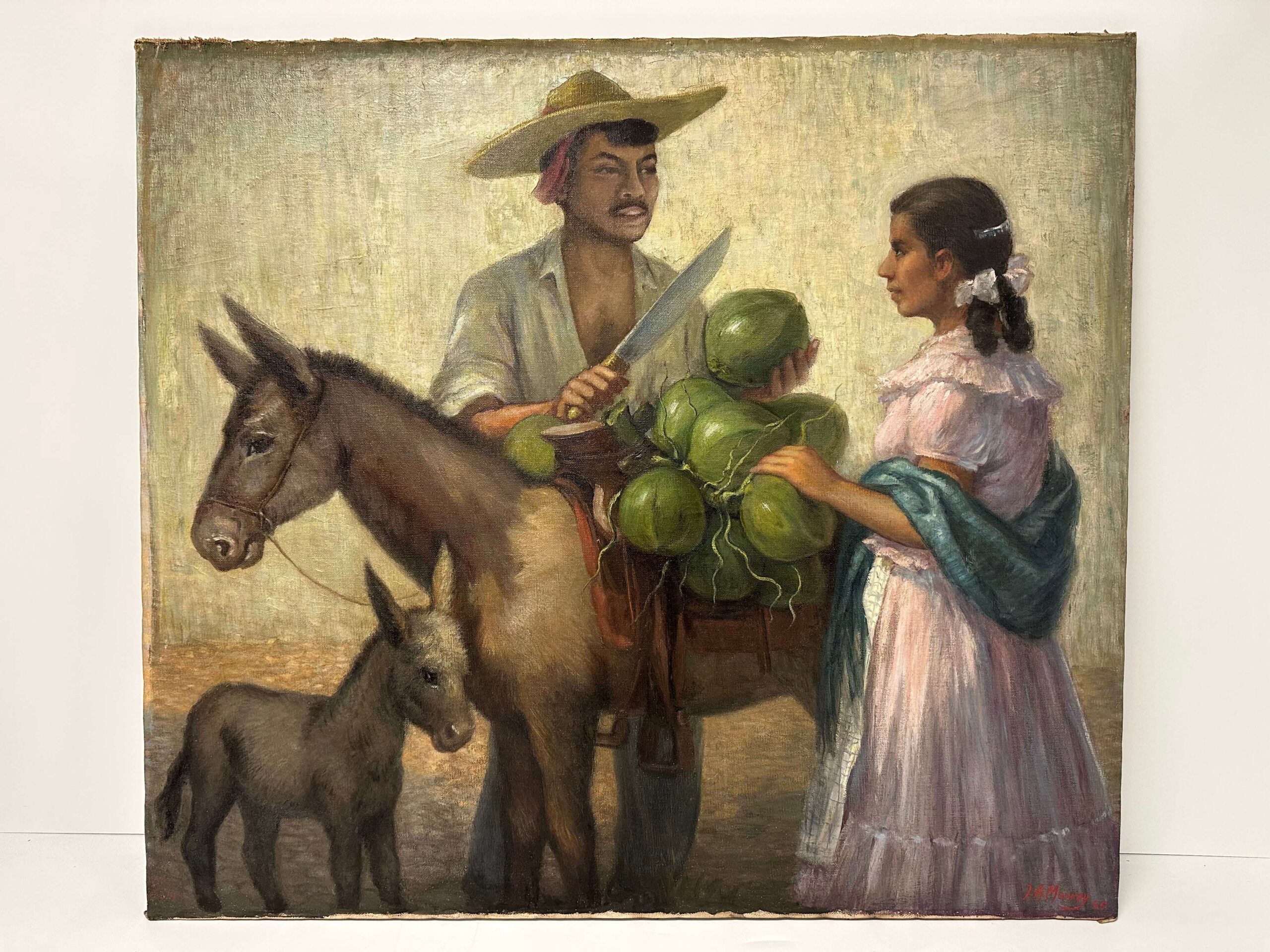
An oil painting arrived with heavy tide lines, flattened color, and moisture warping across the canvas. It left with the canvas stabilized, the tide lines resolved, and the full color range recovered on the original paint layer.
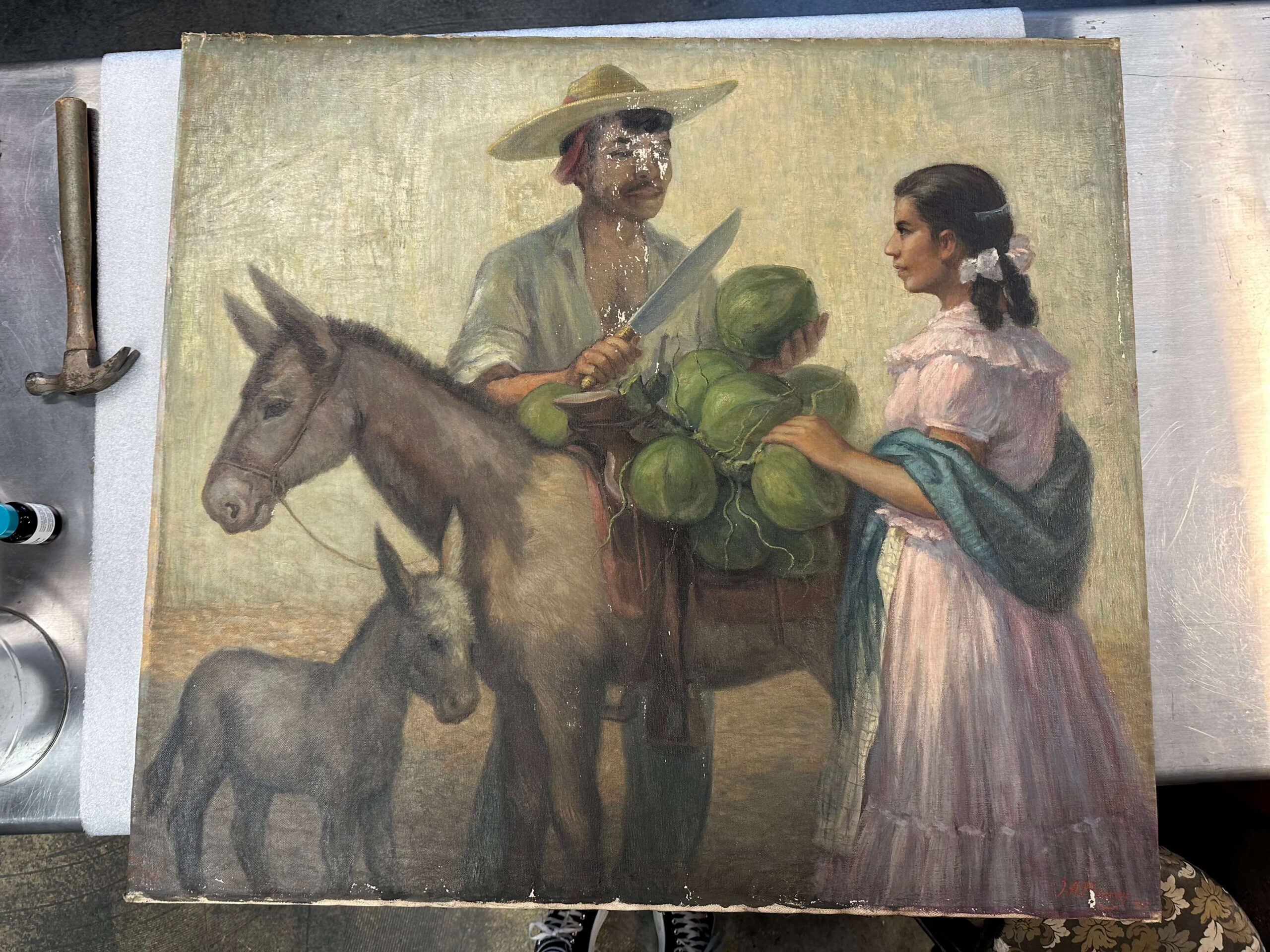
Canvas stabilization, reversible surface cleaning, and inpainting limited to documented paint loss. The original paint reads through again. Every step documented for the file.
Original paint preserved
Inpainting stays within the damage footprint. The artist's paint stays untouched, and the pigments used in the fill can be removed by a future conservator.
Varnish safely removed
Reversible solvents only, tested on a small area before any full cleaning. The yellow tone lifts off, the paint layer stays protected, and original color reads through.
Reversible techniques
Adhesives, fills, and inpainting pigments used in the repair can all be undone without harm to the original. Today's work does not close doors on tomorrow's conservation.
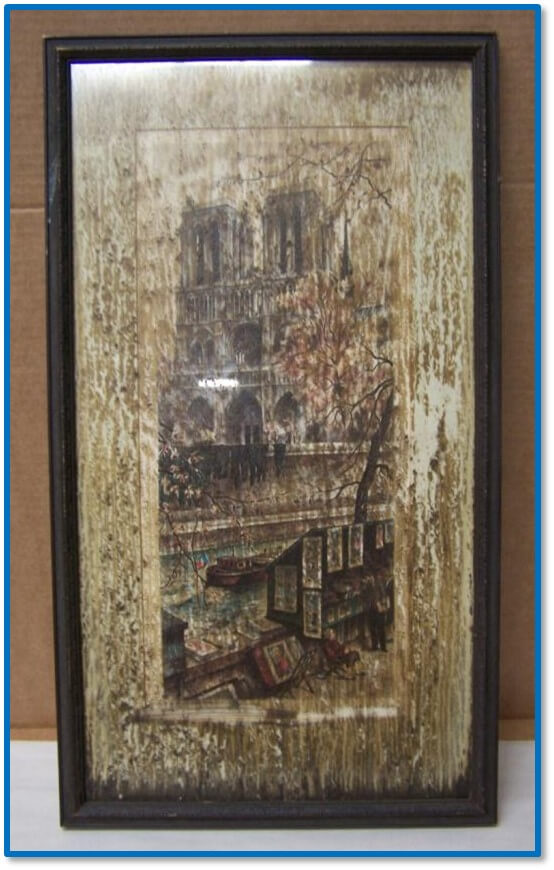
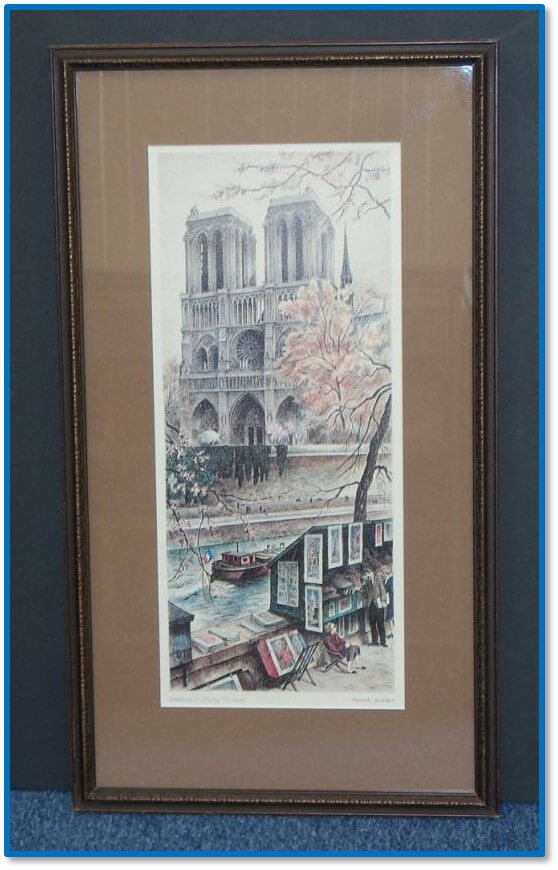
Restored: Real Painting & Frame Projects from Columbus, Cincinnati & Dayton
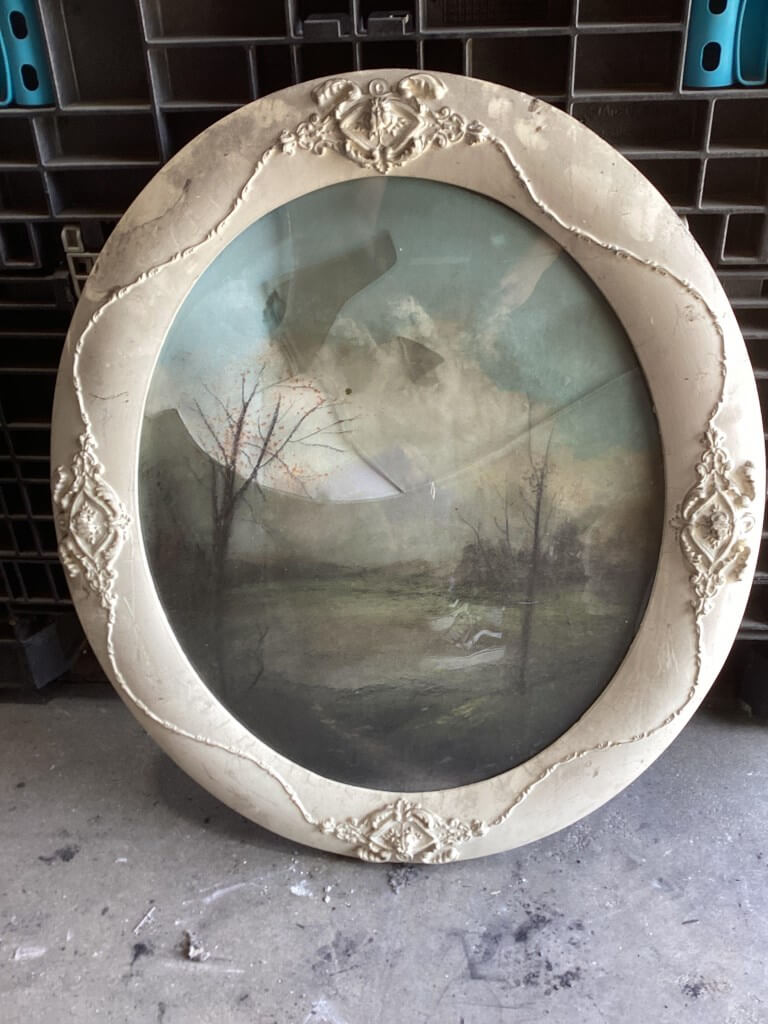
Two recent pieces routed through the Columbus workshop. Different mediums, different damage profiles, same conservation approach: preserve the original, repair what failed, document every step.
Framed Chalk Drawing
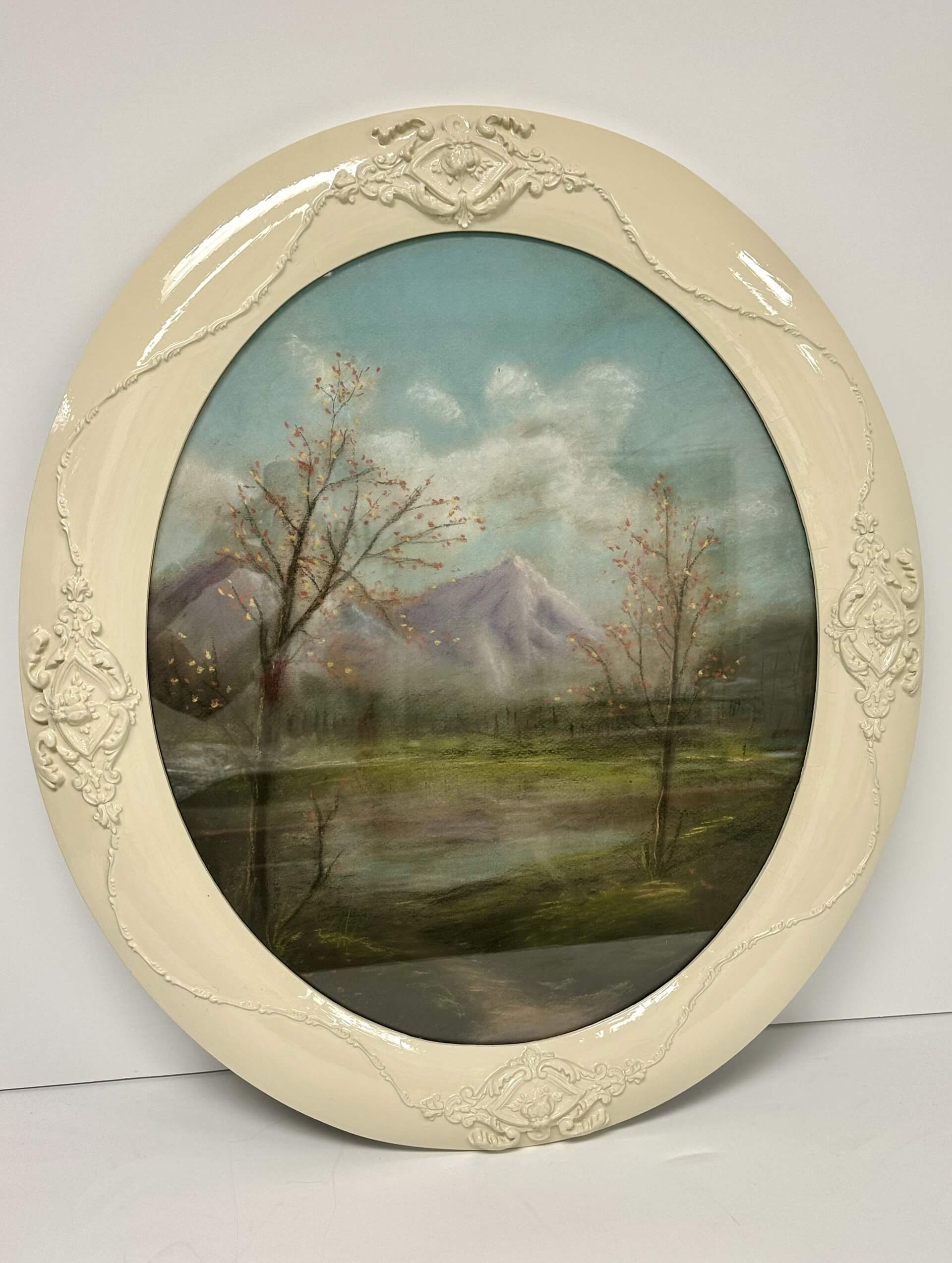
Framed Artwork with Water Damage
How Insurance Claim Restoration Works for Paintings & Frames
Every claim file runs through the same four-step workflow. The Columbus team walks through each step with the owner and the adjuster before anything billable starts.
Document
Full photographic record and condition cataloguing at intake. Damage location, medium, and baseline condition on file so the adjuster has defensible documentation. Mold develops within 48 hours of water exposure, so speed matters.
Assess
A certified conservator evaluates medium, damage, and treatment path. The written scope explains what happens, why, and how each technique ties to the documented damage. Owner and adjuster see it before approval.
Restore
Canvas repair, varnish removal, inpainting, and frame work completed to conservation-grade standards with archival materials. The work is fully reversible, so a future conservator can safely revisit any step.
Return & Documentation
Final inspection, packaged transport, and return delivery with a complete before-and-after record for the owner and the claim file. Preservation guidance travels with the piece.
Why Columbus, Cincinnati & Dayton Trust Prism for Painting Restoration
Insurance Claims Built In
Fire, water, smoke, storm, and transit damage handled end-to-end. The Columbus claims team documents the piece, coordinates with adjusters, and routes the scope on the owner's timeline, not the insurer's.
Conservation-Grade Standards
Archival materials only. No irreversible shortcuts. The standards hold for decades, and any conservator can safely revisit the work later.
Certified Specialists
Recognized certifications in painting restoration, canvas relining, frame gilding, and fine art conservation. Three decades of hands-on experience behind every assessment.
National Network, Local Facility
A physical Columbus facility at 171 Schofield Drive plus the full national Prism franchise network. Local drop-off, secure transport, national resources, conservation-grade standards.
Paintings & Frames We've Restored Across the Tri-Market Area
Columbus Area
Central Ohio coverage from Franklin and Delaware counties with local drop-off at the Columbus facility. Serving Upper Arlington, Worthington, Bexley, Westerville, and surrounding communities.
Cincinnati Area
Southwestern Ohio and Northern Kentucky coverage for painting restoration, frame repair, and insurance-supported conservation. Serving Montgomery, Indian Hill, Mariemont, Blue Ash, and surrounding communities.
Dayton Area
Miami Valley coverage for painting restoration, frame gilding, and conservation work tied to insurance claims or private collections. Serving Centerville, Oakwood, Kettering, and surrounding communities.
Other pieces damaged in the same event? Scope everything together through the broader art restoration assessment so paintings, frames, paper, and furniture move on one plan and one claim.
Painting & Frame Restoration FAQ — Columbus, Cincinnati & Dayton
How much does painting restoration cost in Columbus?
No two pieces cost the same. Size, medium, and damage extent all factor in. Minor surface cleaning on a small oil painting runs in the hundreds; major structural repair on a large canvas can reach several thousand. Most homeowner policies cover water, fire, and storm damage. Call (614) 866-4484 for a free written assessment.
Can water-damaged paintings be restored?
Most of the time, yes — if action is fast. Mold develops within 48 hours. Flaking paint, canvas warping, and tide lines are all reversible with the right intervention. Prism handles water-damaged painting restoration through insurance claims across Columbus, Cincinnati, and Dayton. Call (614) 866-4484.
What is the difference between painting restoration and conservation?
Restoration brings the painting back to original appearance — repairs, varnish cleaning, inpainting. Conservation stabilizes what exists and prevents further deterioration using reversible, archival methods. Prism does both: stabilize first, then restore. Call (614) 866-4484 to talk through which approach fits the piece.
How long does painting restoration take?
Depends on the damage. Surface cleaning and varnish removal: days. Structural repair like canvas relining or extensive inpainting: weeks. Major restorations: two to six weeks typical. A realistic timeline comes with every free assessment. Call (614) 866-4484.
Does insurance cover painting restoration after a fire or flood?
That is most of the work done here. Homeowner and renter policies typically cover fire, flood, storm, and burst-pipe damage — and one claim often covers paintings alongside ceramics, antique furniture, and other heirlooms from the same incident. Call (614) 866-4484 to start a claim.
Can you restore an antique picture frame?
Antique frames are often irreplaceable — ornate gilding, hand-carved detail, period-specific finishes modern reproductions cannot match. Re-gilding, ornamental casting repair, gesso repair, and patina matching all handled at the Columbus studio. Call (614) 866-4484.
What types of paintings can be restored?
Oil paintings, acrylics, watercolors, pastels, mixed media, and prints on canvas, panel, paper, or board. For watercolors and flat media, see the works on paper restoration page. Common damage: flaking paint, canvas tears, smoke, water stains, UV fading, and varnish discoloration. Call (614) 866-4484.
How do I know if my painting needs restoration?
Yellowed varnish, cracking or flaking paint, sagging canvas, water stains, mold, smoke residue, UV fading. If the piece carries sentimental or monetary value, a professional look is worth it — and the assessment is free. Call (614) 866-4484.
Do you restore paintings damaged during a move or in transit?
Common and often covered. Punctures, dents, scratches, cracked frames, broken glass — if it happened during a professional move, the moving company's insurance may cover restoration. Prism handles transit damage claims across the tri-state area. Call (614) 866-4484.
Most Paintings Come Back. Free Assessments Across Columbus & Beyond.
Bring the piece into the Columbus workshop before the insurance clock runs or the damage advances. Every project starts with a certified conservator, a clear scope, and a written timeline. The original paint usually survives the damage, and the painting goes back to the wall looking like the artist's intent.