
Fiber Arts Restoration in Columbus, Cincinnati & Dayton
Tapestries, needlework, quilts, samplers, macrame, and woven fiber pieces restored after fire, flood, smoke, or age. Conservation-grade, insurance-backed, free written assessment.
- Reversible techniques that protect the original fibers
- Insurance-approved with claims specialists on staff
- Tri-market coverage across Columbus, Cincinnati & Dayton
Conservation-Grade
Reversible techniques, archival materials, and documentation a future conservator can safely revisit. Original fibers stay protected.
Insurance Claims Built In
Fire, water, smoke, and transit damage to textiles handled end-to-end. The Columbus claims team coordinates directly with adjusters from intake to return.
Textile + Frame Together
Needlework conservation, fabric stabilization, and shadow-box framing handled under one roof. One shop, one contact, one scope.
Columbus, Cincinnati & Dayton
One Prism team serving the full tri-city footprint. Workshop intake in Columbus, regional service across Cincinnati, Dayton, and beyond.
What Fiber Arts Restoration Actually Involves
A textile carries its own kind of memory. Fiber, dye, weave, ground fabric, and often a frame or mount are all aging at different rates, and damage rarely stops at one layer. Smoke clings to the threads. Water shifts the dye. A failing ground fabric pulls original stitches out of place. The real work of textile restoration is reading what the fibers still hold and stabilizing around the damage, because every thread retained is history preserved.
Conservation-grade textile work starts with that reading. Surface soil and smoke residue come off with medium-specific dry methods that do not stress the structure. Failing ground fabric gets consolidated. Cordwork, knotting, and stitches are repaired only where the original cannot be saved, and any new thread or fiber is matched to the period and chosen so a future conservator can reverse it. Tapestries get backing. Quilts get stabilized batting support without over-restoration. Samplers get archival mounts that protect the textile from the frame itself.
The Columbus workshop handles the textile and the framing together, so a restored needlework piece returns ready to hang under archival glazing. When the same loss event also touched paintings, frames, paper, ceramics, or furniture, the broader art restoration assessment scopes the full collection on one plan and one claim.
What people usually want to know first
Most calls about damaged textiles come in with three questions. Can the piece be saved. What will it cost. Will insurance cover it. Everything else follows.
Can My Damaged Textile Actually Be Saved?
Most textiles come back. Surface soil, foxing, smoke residue, dye shift, and most water exposure are recoverable. The signals that matter are fiber integrity, dye stability, and the condition of the ground fabric, and a free written assessment lays all three out before any work is committed.
How Much Does Fiber Arts Restoration Cost?
Cost tracks with size, materials, and damage extent. Surface cleaning on a small needlework runs in the hundreds; structural work on a large tapestry or heirloom quilt can reach several thousand. Every project starts with a free written assessment so the numbers are clear before scheduling.
Does Insurance Cover This?
Usually yes, when a covered event caused the damage. Fire, water, smoke, storm, and transit loss on textiles are typically covered under homeowner, renter, or mover liability policies. The Columbus claims team handles documentation, adjuster coordination, and scope in one file.
Fiber Arts Restoration Specialties
Tapestry & Woven-Piece Restoration
The weave tells the history. We protect it.
Tapestry repair, thread stabilization, dye-loss retouching, and mount-safe backing for antique and contemporary woven pieces. Period weaving techniques matched where the damage requires new work.
Needlework & Embroidery Conservation
Every stitch stays original where it can.
Cross-stitch, crewel, sampler, and hand-embroidery conservation. Foxing removal, stabilization of failing ground fabric, and careful thread replacement only where original stitches cannot be saved.
Quilt & Heirloom Textile Stabilization
Preserved, not over-repaired.
Quilt stabilization, fabric consolidation, and batting support without over-restoration. The goal is preservation for another generation, not turning a worked textile into a new one.
Macrame, Weaving & Rope-Fiber Repair
Structure rebuilt where the knots failed.
Knot repair, rope and fiber stabilization, dust and smoke cleaning, and form restoration for macrame wall hangings, woven baskets, and sculptural fiber pieces. Shape and tension restored to match the maker's original intent.
Water, Fire & Smoke Damage Textile Recovery
Mold sets in within 48 hours. Fast action matters.
Tide lines, smoke residue, soot, and mold recovery on textiles. Handled through insurance claims across Columbus, Cincinnati, and Dayton, often alongside paintings, frames, or paper pieces from the same incident.
Frame & Mount Conservation for Textiles
Archival framing is half the preservation.
Shadow boxes, UV-filtering glazing, acid-free mounts, and period frame restoration for needlework, samplers, and framed textiles. Often paired with custom framing when a restored textile needs new archival presentation.
A damaged tapestry, a water-stained quilt, or a needlework piece with failing ground fabric? Call (614) 866-4484 or Submit a Claim and the Columbus team will walk through the restoration before anything gets scheduled.
What a good fiber arts restoration looks like
A macrame owl wall hanging arrived with broken cords, compressed fibers, and years of accumulated dust dulling the form. It left with the knots rebuilt, the fibers lifted, and the piece displaying the way the maker intended.
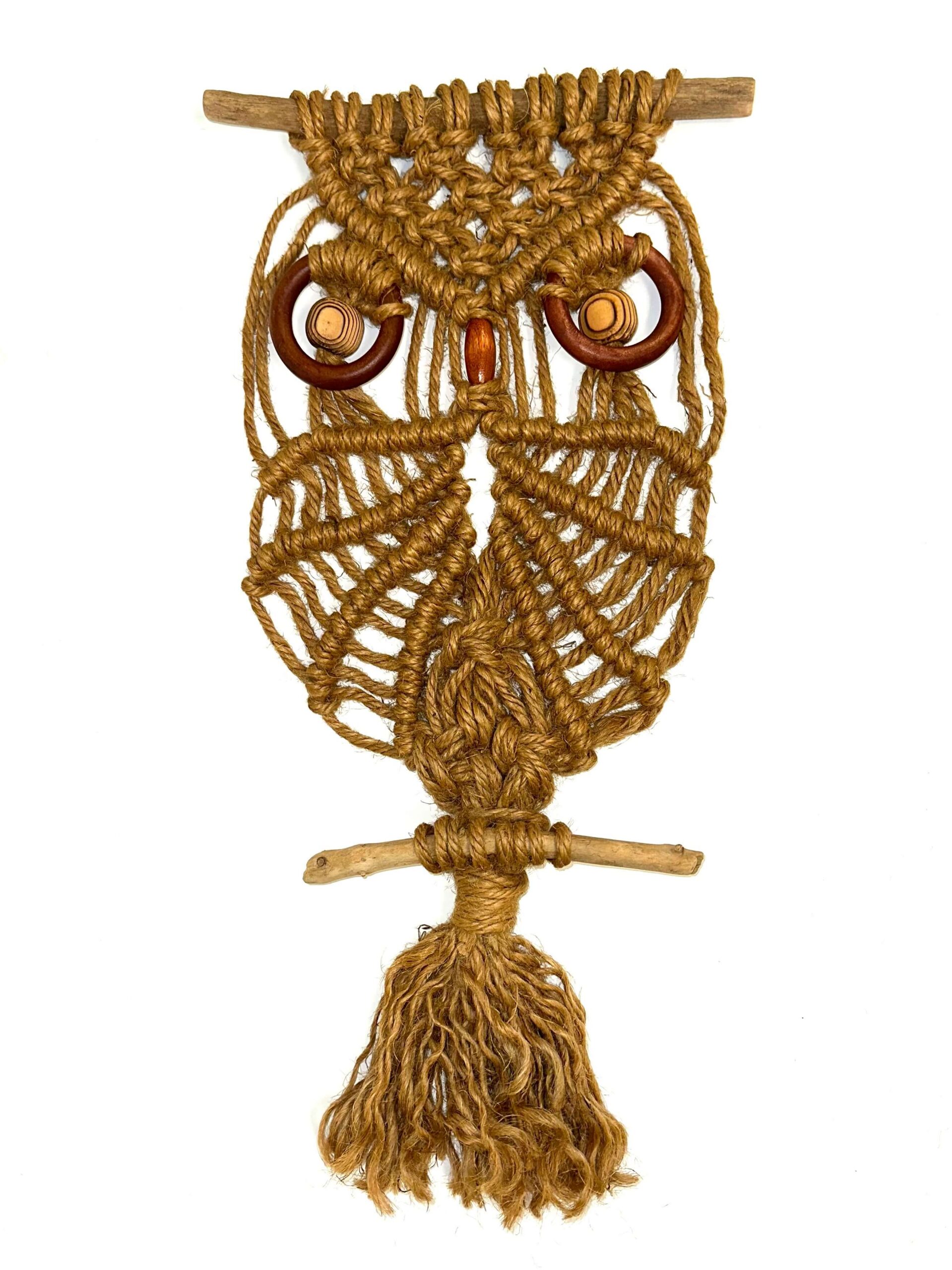
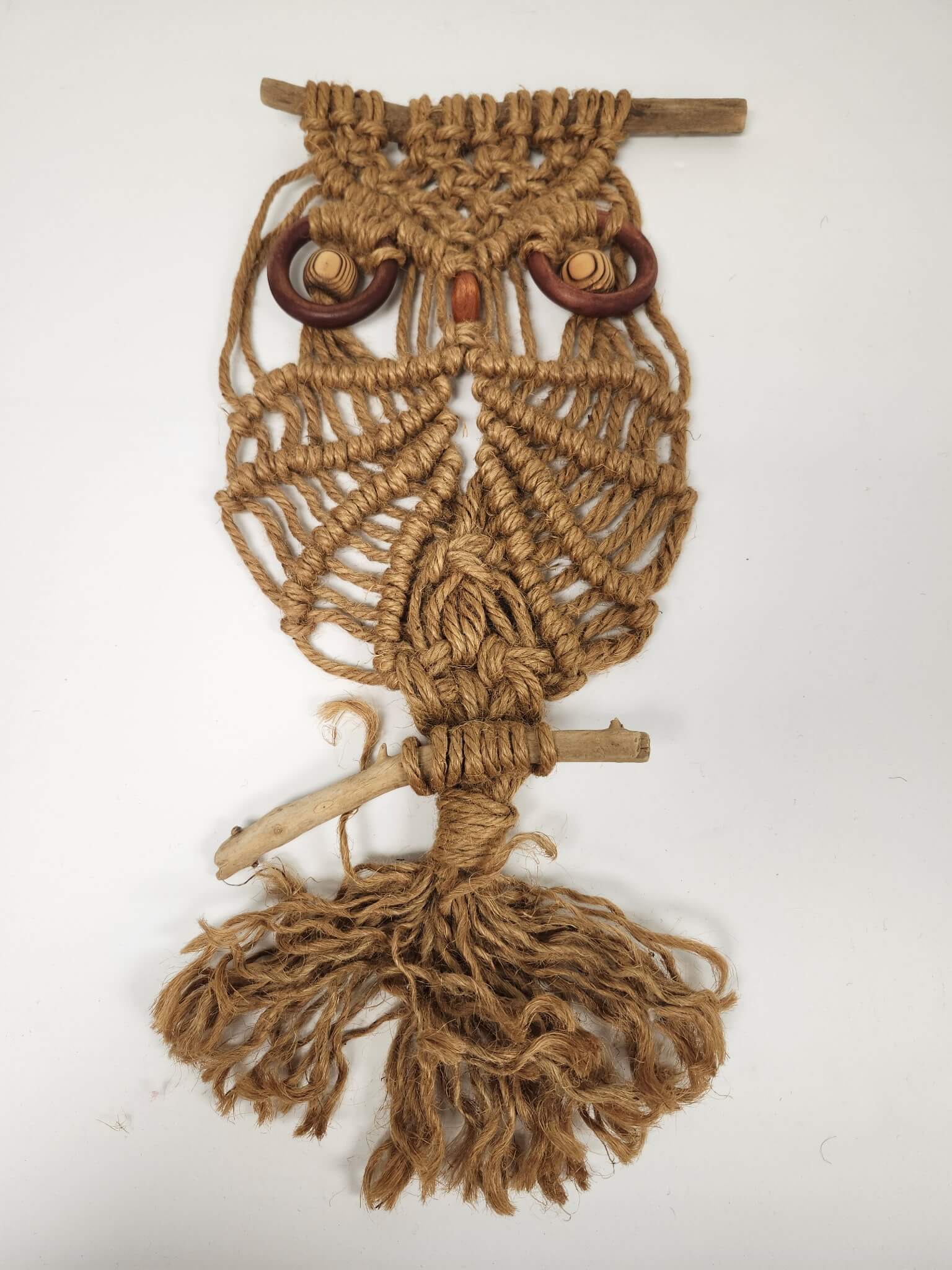
Cord repair, fiber cleaning, and form restoration using techniques matched to the original materials. Every step documented for the file.
Original fibers preserved
Stabilization stays inside the damage footprint. The maker's original cordwork stays untouched wherever the structure can still hold the form on its own.
Dust and smoke safely removed
Medium-specific dry cleaning lifts soil and smoke residue out of the fiber. No wet methods that would stress the knots or pull the structure out of true.
Reversible techniques
Knots, patches, and stabilizers used in the repair can all be revisited by a future conservator. Today's work does not close doors on tomorrow's conservation.

Framed cross-stitch, archival re-frame
A vintage cross-stitch sampler arrived with surface soiling, foxing on the linen ground, and a frame past its service life. The textile was stabilized, cleaned with medium-specific techniques, and re-framed to archival standards so the piece displays safely for the next generation.
Restored: A Recent Fiber Arts Project from Columbus, Cincinnati & Dayton
One recent piece routed through the Columbus workshop. More documented projects coming as Amber's restoration archive grows, and the same conservation approach applies: preserve the original, repair what failed, document every step.
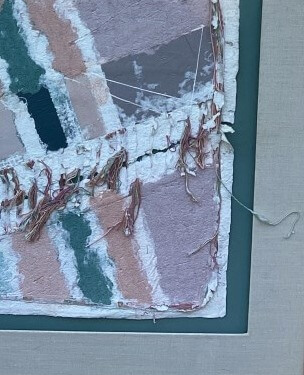
Mixed-Media Paper Collage

How Insurance Claim Restoration Works for Fiber Arts
Every claim file runs through the same four-step workflow. The Columbus team walks through each step with the owner and the adjuster before anything billable starts.
Document
Full photographic record and condition cataloguing at intake. Damage location, fiber type, and baseline condition on file so the adjuster has defensible documentation. Mold sets in within 48 hours of water exposure on textiles, so speed matters.
Assess
A certified conservator evaluates fiber integrity, dye stability, ground fabric, and treatment path. The written scope explains what happens, why, and how each technique ties to the documented damage. Owner and adjuster see it before approval.
Restore
Stabilization, medium-specific cleaning, stitch and knot repair, and archival mounting completed to conservation-grade standards. The materials used are reversible, so a future conservator can safely revisit any step in the file.
Return & Documentation
Final inspection, packaged transport, and return delivery with a complete before-and-after record for the owner and the claim file. Preservation guidance for ongoing display travels with the piece.
Why Columbus, Cincinnati & Dayton Trust Prism for Fiber Arts Restoration
Three Decades of Conservation Experience
Textile work sits inside a broader conservation practice that has handled paintings, frames, paper, ceramics, and furniture for thirty years. The same standards apply to a quilt, a sampler, or a tapestry.
Tri-Market Coverage
One Prism team for Columbus, Cincinnati, and Dayton. Workshop intake at the Columbus facility, regional service across the full footprint, and a single point of contact for the whole project.
Insurance-Approved
Claims specialists on staff. Fire, water, smoke, storm, and transit damage on textiles documented and routed through the adjuster on the owner's timeline, not the insurer's.
Workshop Consolidation
One piece, one scope, one file. Textile conservation, fabric stabilization, and archival framing handled at the same workshop, so the owner is not chasing three vendors for one needlework piece.
Fiber Arts Pieces Restored Across the Tri-Market Area
Columbus Area
Central Ohio coverage from Franklin and Delaware counties with local drop-off at the Columbus facility for tapestries, needlework, quilts, and macrame pieces. Serving Upper Arlington, Worthington, Bexley, Westerville, and surrounding communities.
Cincinnati Area
Southwestern Ohio and Northern Kentucky coverage for fiber arts conservation, textile stabilization, and insurance-supported restoration. Serving Montgomery, Indian Hill, Mariemont, Blue Ash, and surrounding communities.
Dayton Area
Miami Valley coverage for needlework conservation, quilt stabilization, and woven-piece restoration tied to insurance claims or private collections. Serving Centerville, Oakwood, Kettering, and surrounding communities.
Other pieces damaged in the same event? Scope everything together through the broader art restoration assessment so paintings, frames, paper, furniture, ceramics, and fiber arts move on one plan and one claim.
Fiber Arts Restoration FAQ — Columbus, Cincinnati & Dayton
How much does fiber arts restoration cost in Columbus?
No two pieces cost the same. Size, materials, and damage extent all factor in. Surface cleaning on a small needlework runs in the hundreds; structural work on a large tapestry or heirloom quilt can reach several thousand. Most homeowner policies cover water, fire, and storm damage to textiles. Call (614) 866-4484 for a free written assessment.
Can water-damaged textiles be restored?
Most of the time, yes, if action is fast. Mold sets in within 48 hours on wet fiber. Tide lines, dye bleed, and saturation damage are usually reversible with the right intervention. Prism handles water-damaged textile restoration through insurance claims across Columbus, Cincinnati, and Dayton. Call (614) 866-4484.
Do you work on antique quilts and heirloom textiles?
Yes. Antique quilts, samplers, hand-embroidered linens, and other heirloom textiles get stabilization-first treatment. The goal is preserving the original fibers for another generation, not turning a worked piece into a new one. Free written assessment before any treatment is scheduled. Call (614) 866-4484.
Is macrame and woven-piece restoration part of fiber arts conservation?
Yes. Macrame wall hangings, woven baskets, and sculptural fiber pieces all fall inside the fiber arts scope. Knot repair, rope and cord stabilization, dust and smoke cleaning, and form restoration are handled at the Columbus workshop with techniques matched to the original materials. Call (614) 866-4484.
How do you handle smoke and fire damage on textiles?
Smoke residue and soot are removed with medium-specific dry methods that do not stress the fiber structure. Heat-damaged areas are stabilized, then cleaned in stages so dyes and weave are not pushed past tolerance. Fire and smoke textile recovery is handled through insurance claims. Call (614) 866-4484.
Will insurance cover fiber arts restoration?
Usually yes, when a covered event caused the damage. Homeowner and renter policies typically cover fire, flood, smoke, storm, and transit loss on textiles, and one claim often covers fiber pieces alongside paintings, frames, and ceramics from the same incident. Call (614) 866-4484 to start a claim.
How long does a typical textile restoration take?
Depends on the damage. Surface cleaning on a small needlework: days. Stabilization and stitch repair on a quilt or tapestry: weeks. Major structural work with archival re-framing: four to eight weeks typical. A realistic timeline comes with every free assessment. Call (614) 866-4484.
Do you offer archival framing for restored needlework and samplers?
Yes. Shadow boxes, UV-filtering glazing, acid-free mounts, and period frame restoration are part of the fiber arts scope. Archival framing is half the preservation, so restored textiles head back to the wall in a presentation that protects the work for the long run. Call (614) 866-4484.
What areas do you serve for fiber arts restoration?
Columbus, Cincinnati, Dayton, Southern Ohio, Northern Kentucky, and West Virginia. Workshop intake happens at the Columbus facility at 171 Schofield Drive, with regional service across the full tri-market footprint and beyond. Call (614) 866-4484.
Bring the fiber arts piece to the Columbus workshop
Bring the textile in before the insurance clock runs or the damage advances. Every project starts with a certified conservator, a clear written scope, and a realistic timeline. The original fibers usually survive the damage, and the piece goes back to display condition the way it was meant to hang.