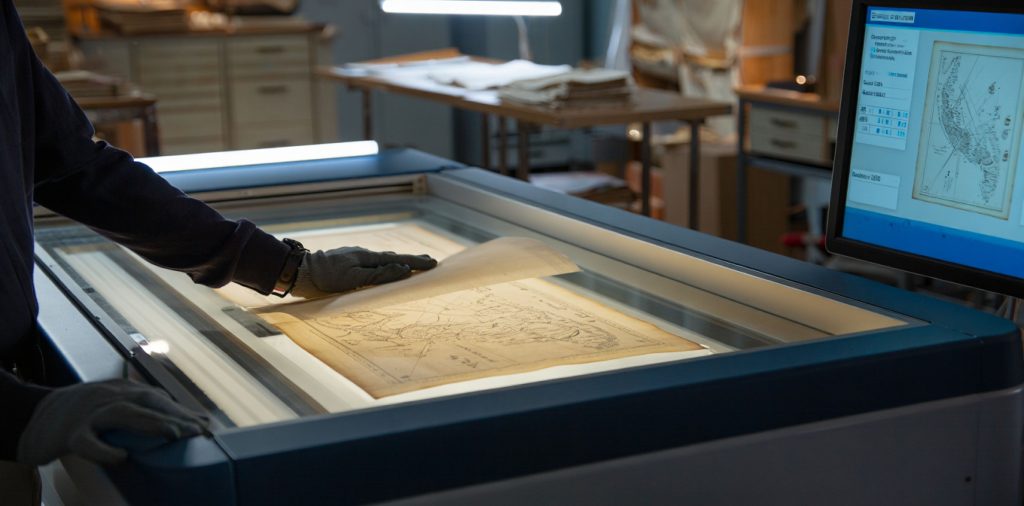
Step 1: Assessment & Inventory
All documents and records are assessed on-site and catalogued with photo documentation before any materials are moved.
Stabilization, recovery, and digitization for paper records, photographs, and archives — with claim-ready documentation for adjusters and contractors. Rapid response after fire, smoke, water, or mold preserves critical information that cannot be recreated.
Documents and digitizing restoration is the specialized process of recovering paper records, files, books, photographs, and other document-based materials damaged by fire and smoke, water, mold, or vandalism. Unlike general disaster cleanup, document restoration focuses on stabilizing, recovering, preserving, and digitizing critical records so information remains accessible even after a loss event.
This service applies to business records, legal documents, financial files, medical records, archival materials, photographs, and other paper-based assets. Prism’s document recovery services and document digitizing services help businesses, institutions, property owners, insurance adjusters, and restoration contractors protect critical information following a loss.
Prism’s document recovery division restores a wide range of paper records and information assets damaged by fire and smoke, water, mold, and vandalism.

Prism’s document restoration process follows a documented, step-by-step workflow from initial assessment through restoration and return, designed to meet insurance documentation standards at every stage.
All documents and records are assessed on-site and catalogued with photo documentation before any materials are moved.
Documents are carefully packed-out and transported to Prism’s document restoration facility with documented item-level tracking records throughout the recovery process.
Water-saturated documents are treated with vacuum freeze-drying, the industry standard for halting deterioration and recovering saturated paper. Fire and smoke-affected materials undergo contamination removal, stabilization, and acid damage treatment. All recovered materials are assessed for digitization, preserving critical information in a secure digital format and reducing future risk.
Each document collection receives a written restorability assessment. Materials that cannot be recovered are documented with condition findings and replacement references where applicable for adjuster review.
Recovered documents undergo final quality review before return, with a complete documentation package delivered to the adjuster before final billing. When requested, Prism can also assist with document organization, reorganization, and reshelving efforts to help businesses and institutions return records to operational use more efficiently.
See our full pack out and documentation process
Find out More
Prism’s document recovery process is built around the documentation and communication standards that insurance adjusters and restoration contractors need to close document recovery claims efficiently.
Prism’s document recovery specialists work directly with insurance adjusters and businesses managing recovery of critical records after a loss. From large-scale business records restoration projects to specialized insurance document restoration claims, every recommendation is supported by documented recovery findings and claim-ready reporting.
For losses involving digital files stored on damaged devices, Prism’s data recovery process can run alongside document restoration.
Whether you’re coordinating a commercial document recovery project or managing a residential claim involving critical records, submit a claim and a Prism specialist will assess the loss and initiate the right recovery workflow.
For adjusters and organizations managing document losses, the restore-versus-replace decision often depends on the value of the information rather than the value of the paper itself. Many records contain legal, historical, operational, or institutional information that cannot be recreated regardless of replacement cost. What makes document losses uniquely time-sensitive is that deterioration can begin within hours of water exposure and mold can develop within 24 to 48 hours. The recovery window is narrow, and once it closes, the information is gone permanently.
Prism evaluates each collection individually before recovery begins. Every recommendation is supported by documented condition findings, recovery assessments, and restorability determinations, providing adjusters with a defensible basis for claim decisions.
Document restoration and digitizing is the process of recovering paper records and information assets damaged by fire, smoke, water, mold, or contamination. Recovery may include drying, cleaning, stabilization, remediation, and digital conversion to preserve information in a secure format even when the original documents have been partially or permanently damaged. Prism’s document digitizing services run alongside the physical restoration process, reducing future risk and supporting long-term record accessibility.
Updates, media coverage, and industry insights related to specialty contents restoration and disaster recovery.
Real-world examples showing how Prism helps adjusters, contractors, and businesses recover valuable contents after loss events.
Expert articles covering claims documentation, specialty restoration processes, and best practices after property damage.