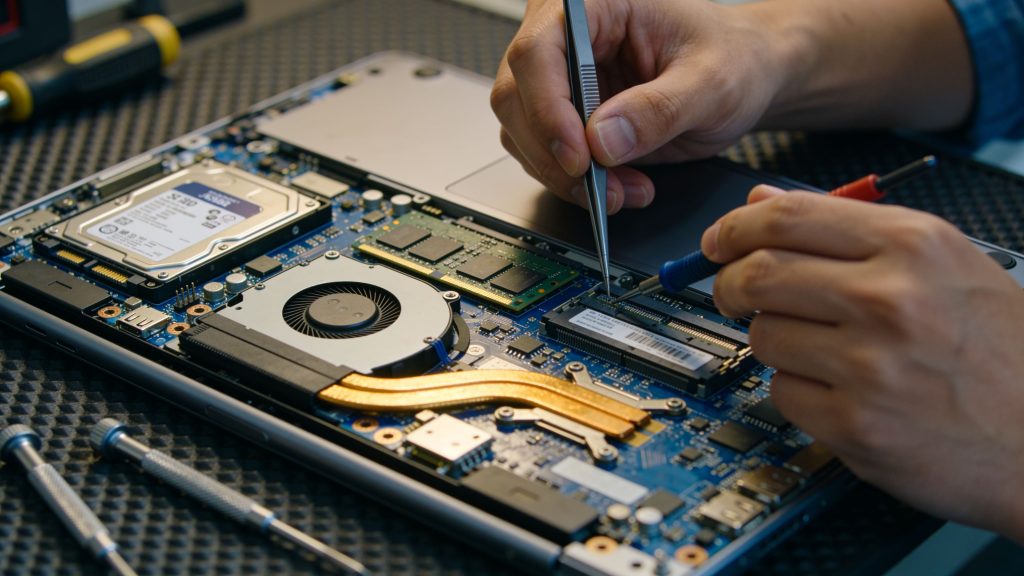
Step 1: Assessment & Inventory
All electronics and equipment are assessed on-site and catalogued with photo documentation before any items are moved.
Diagnostic testing, decontamination, and functional validation for electronics, appliances, and commercial equipment — with claim-ready documentation for adjusters and contractors. Rapid assessment after fire, smoke, water, or power events improves recovery outcomes and reduces replacement costs.
Electronics and equipment restoration is the specialized process of recovering electronic devices, business equipment, and technology assets damaged by fire and smoke, water, contaminants, power events, or other property losses. Unlike general disaster cleanup, electronic equipment restoration focuses on diagnostic testing, decontamination, repair, and functional validation to determine whether equipment can be safely returned to service.
This service applies to everything from consumer electronics and household appliances to commercial equipment, office technology, manufacturing controls, and specialized business systems. Claims are commonly initiated by insurance adjusters, restoration contractors, businesses, and property owners following a loss event. Prism’s electronics restoration specialists provide documented diagnostic findings and restorability assessments to help adjusters and contractors move claims forward efficiently.
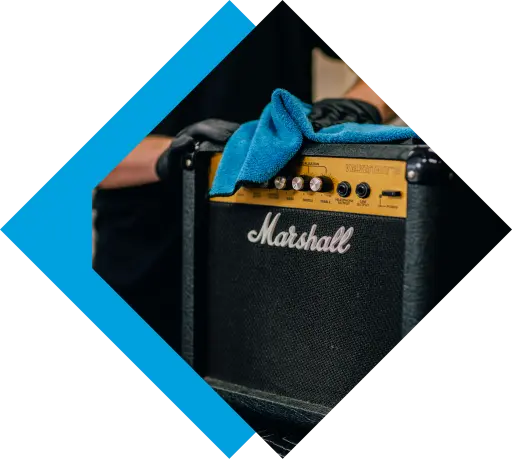
Prism’s electronics division restores a wide range of electronic devices and equipment damaged by fire and smoke, water, contamination, and power-related events.
Prism’s electronics restoration process follows a documented, step-by-step workflow from initial assessment through restoration and return, designed to meet insurance documentation standards at every stage.
All electronics and equipment are assessed on-site and catalogued with photo documentation before any items are moved.
Items are carefully packed and transported to Prism’s electronics restoration facility with documented item-level tracking records throughout the restoration process.
Equipment undergoes diagnostic testing, contamination assessment, corrosion mitigation, and functional validation to IPC J-STD-001 industry standards. Where required, Prism coordinates with OEMs to confirm operability before return. All diagnostic findings are documented to support restorability determinations and claim decisions.
Each item receives a written restorability assessment. Equipment that cannot be restored is documented with condition findings.
Restored equipment undergoes final testing and quality assurance before return, with a complete documentation package delivered to the adjuster before final billing.
See our full pack out and documentation process
Find out More
Prism’s electronics restoration process is built around the documentation and communication standards that insurance adjusters and restoration contractors need to close electronics and equipment claims efficiently.
Prism’s electronics restoration specialists work directly with insurance adjusters and businesses managing equipment recovery after a loss. From single-device evaluations to large-scale commercial electronics restoration projects, every recommendation is supported by documented testing, condition findings, and written restorability determinations. For losses involving data stored on damaged devices, Prism’s restoration process can be coordinated with data recovery services.
Whether you’re an adjuster coordinating a claim or a business recovering critical equipment after a loss, submit a claim and a Prism specialist will assess your situation and coordinate the right restoration support
For adjusters and businesses managing equipment losses, restoration is often faster and more defensible than replacement, particularly for commercial systems where procurement, delivery, installation, and testing can take weeks or months. What makes electronics uniquely time-sensitive is that contamination, corrosion, and power-related damage continue affecting components after the loss event. The longer evaluation is delayed, the narrower the recovery window.
Prism evaluates each unit individually before any restoration work begins. Every decision is supported by documented diagnostic findings, condition notes, and a written restorability determination, giving adjusters a complete, defensible record for equipment claim decisions. This matters most for specialized business systems, where replacement lead times can extend recovery timelines significantly. For items that cannot be restored, Prism provides replacement cost references to support accurate claim settlement.
Electronics and equipment restoration is the process of recovering technology assets and equipment affected by fire and smoke, water, contamination, or power-related events. Restoration may include diagnostic testing, specialized cleaning, corrosion mitigation, repair, and functional validation to determine whether equipment can be safely returned to operation.
Updates, media coverage, and industry insights related to specialty contents restoration and disaster recovery.
Real-world examples showing how Prism helps adjusters, contractors, and businesses recover valuable contents after loss events.
Expert articles covering claims documentation, specialty restoration processes, and best practices after property damage.