48-Hour Window
Wet paper in Central Ohio humidity grows mold in under a day. Same-day pickup and emergency freeze-drying stop the clock before the damage becomes permanent.
Works On Paper & Document Restoration
A flooded basement or burst pipe ruins the things people cannot replace first — birth certificates, wills, vintage prints, family records. Most can still be saved. Free assessment.
Wet paper in Central Ohio humidity grows mold in under a day. Same-day pickup and emergency freeze-drying stop the clock before the damage becomes permanent.
Deacidification, inpainting, and archival treatments built to the museum standard for reversibility. Nothing done today blocks a future conservator.
Dedicated Columbus claims staff manage documentation, condition reports, and adjuster communication from first call through reimbursement.
One Prism team serving the full tri-city footprint, with insurance claim support built into every assessment.
Most of the documents that come through the shop were sitting in a basement when something went wrong. Sump pump fails overnight. Pipe bursts in a wall. Spring storm pushes water through the foundation. Birth certificates, wills, framed prints, boxes of family records — the paper absorbs the water and starts deteriorating within hours.
Central Ohio humidity averages 70 to 80 percent in summer. Wet paper in that environment grows mold in under 24 hours. That timeline is shorter than what conservators in drier climates plan around, and it is the reason a same-day call changes what is recoverable.
If restoration cannot happen the same day, seal the documents in plastic bags and put them in a freezer. Freezing halts the mold and the ink migration and buys time until the emergency pickup arrives. Do not try to separate stuck pages, blot water off the surface, or lay soaked paper flat to dry. Every one of those instincts makes the damage permanent.
If the damage came from a covered event — fire, water, storm, burst pipe — your homeowner policy almost always covers paper restoration. A single claim covers every affected item from the same incident, so documents, paintings and frames, photographs, and antique furniture go on one scope. The art restoration hub coordinates the full collection under one roof.
When the call comes in, people are trying to figure out the same three things: whether the documents can actually be saved, how fast they need to move, and whether insurance is going to cover any of it.
Most of them, yes, even the ones that look completely destroyed. Sump pump failures, burst pipes, and spring storms account for most of the calls, and documents that arrive stuck together, waterlogged, or already showing mold come back more often than people expect. Speed is the thing that changes the outcome. Freezing buys time if we cannot pick up the same day.
Inside 24 to 48 hours if you can, sooner if the paper is already showing a musty smell or visible mold. Once mold establishes, the scope of work jumps and so does the cost. Same-day emergency freeze-drying is available across Columbus, Cincinnati, and Dayton, and that same-day response is often the difference between full recovery and partial.
Often, yes. Sudden water events, fires, and storms trigger coverage on most homeowner and renter policies, and one claim covers every affected item from the same incident. Our Columbus claims team works directly with adjusters from day one, so the paperwork moves without you having to chase it.
Saturated certificates, wills, and family records stabilized inside the 48-hour mold window.
Emergency freeze-drying, ink stabilization, mold arrest, and insurance claim coordination handled as one workflow. Mold begins forming on wet paper in Central Ohio conditions within 48 hours, which is why same-day response is built into the service.
Birth certificates, wills, deeds, legal records, family bibles, handwritten manuscripts.
These are the documents people reach for first after a loss event, and the ones professional conservation saves most reliably. Treatment runs through deacidification, flattening, legibility recovery, and archival protection so the records return stable and readable.
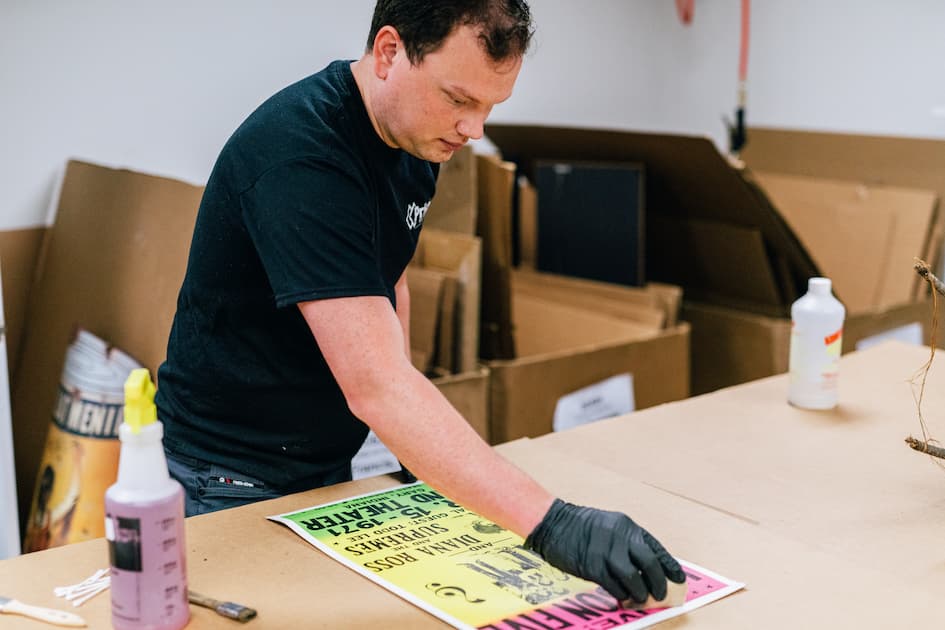
Foxing, tape damage, adhesive staining, and water damage on drawings, etchings, lithographs, and vintage posters.
Surface cleaning, foxing removal, inpainting, and pigment-matched color correction that leaves the original image untouched. Framed pieces get scoped with the painting and frame restoration team so the whole loss stays on one plan.
Ohio summer humidity runs 70 to 80 percent. Wet paper in that environment is a mold problem in under a day.
Mold and mildew cleaning, smoke and soot removal, fading stabilization, and structural repair for paper that has been sitting too long in the wrong environment. Framed works affected in the same loss event get treated alongside the unframed documents.
Long-term protection after the conservation work is finished.
UV-protective glazing, acid-free matting, and archival mounting engineered for Ohio seasonal humidity swings. The custom framing team finishes the job so restored pieces return ready to hang.
Antique maps, historical manuscripts, business archives, and other paper that predates modern production.
Tear repair, deacidification, foxing removal, flattening, and archival encapsulation. This is the specialized handling generic document services cannot provide, and the kind of paper that fails fast if it goes to the wrong shop.
Damage not listed here? Call (614) 866-4484. We see almost everything on paper, and almost everything on paper is restorable.
“The text was completely illegible when it came in. Now it reads like it was never damaged. That is what paper conservation is supposed to do.”
Honorable Discharge certificate brought in after a basement water event. Ink stabilized, staining cleared, text recovered, paper structure rebuilt. Every step documented for the claim file.
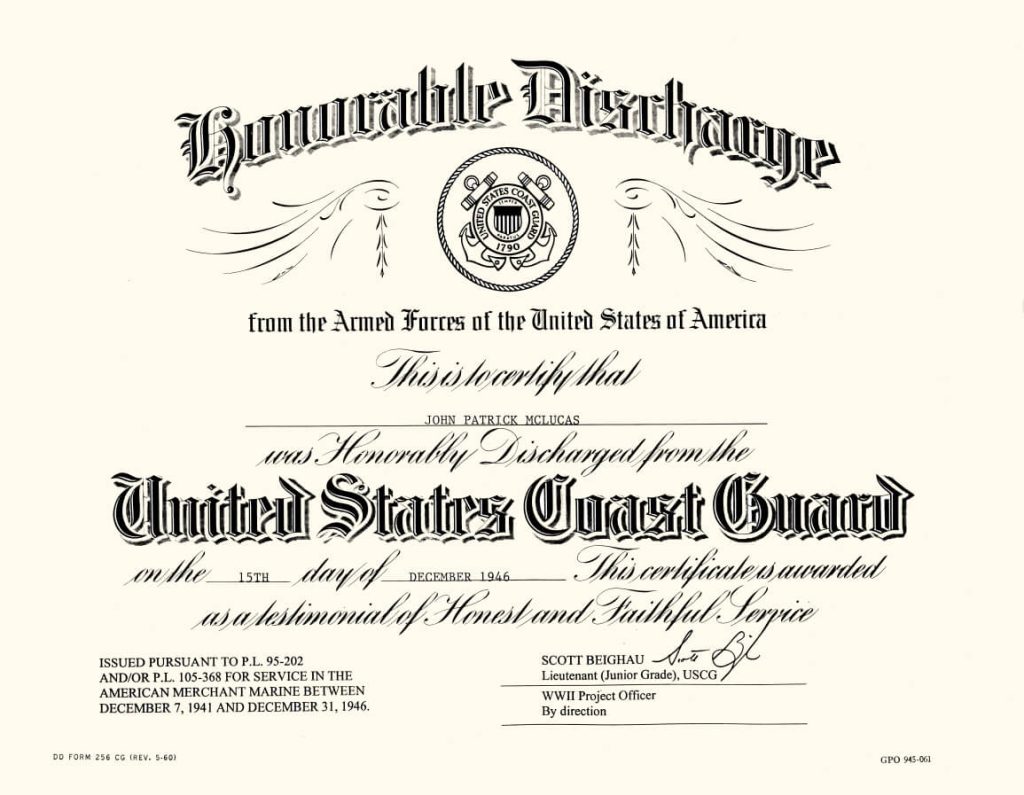
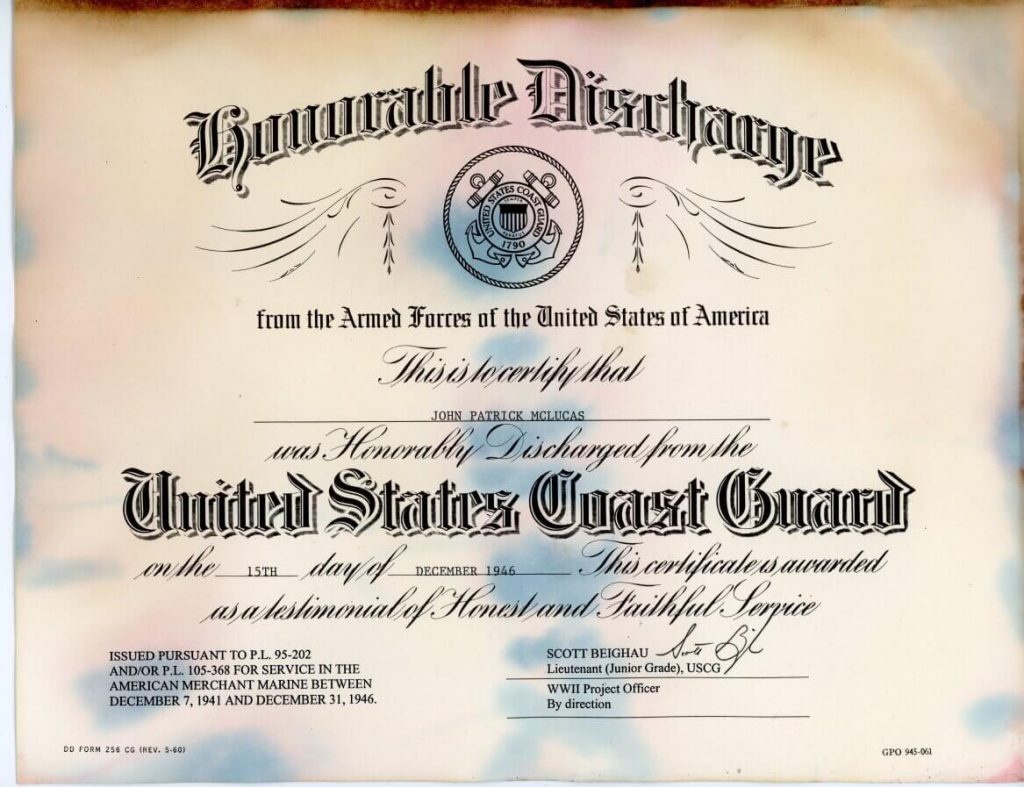
Ink stabilization and stain removal bring legibility back on documents that looked permanently destroyed. Reading the page is the point, and reading the page is almost always recoverable.
Deacidification and structural repair stop active deterioration and rebuild handling strength. The paper returns stable enough to archive, frame, or pass on.
Every material and technique used on the document can be safely undone by a future conservator. Today’s work does not close any doors for tomorrow’s.
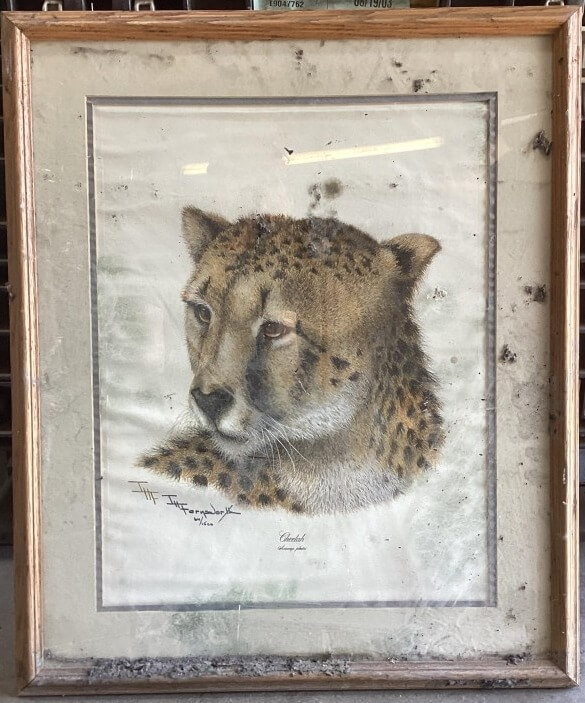
These are not stock shots. Every image below is a real piece of paper that came through the Columbus workshop after water, mold, age, or the wrong storage left it in a condition the owner did not think was recoverable.

Most of the paper damage we see comes out of a covered event: a fire, a flood, a storm, a pipe that failed overnight. Prism runs the claim from the first round of documentation to the final return shipment, so the adjuster gets what they need and you get your records back.
Every affected document, print, map, and framed piece gets photographed, catalogued, and entered into the claim file. That baseline starts the clock on your recovery and gives the claim something solid to stand on if the adjuster ever pushes back.
Saturated paper gets freeze-dried or air-dried immediately to halt deterioration. Once stable, a conservator works through damage type, paper substrate, and treatment approach, then sends the adjuster a written scope and quote before any billable work begins.
Deacidification, tear repair, mold remediation, stain removal, ink stabilization, and protective treatment. Every technique is archival-grade and fully reversible, and every step is logged in the permanent restoration file.
Documents come back with before-and-after records, treatment notes, and a conservation file built for your insurance archive and for any future conservator who needs the history. We stay with the claim through approval and final reimbursement.
Central Ohio humidity puts mold on wet paper in under 24 hours. Same-day emergency response, stabilization, and freeze-drying run across the full tri-market footprint, because a same-day call changes what is recoverable.
Paper conservators who understand Ohio basements specifically, not a generic national protocol. Central Ohio averages 70 to 80 percent relative humidity in summer, and that fact changes how stabilization, drying, and treatment get approached.
Dedicated Columbus claims staff know Ohio carriers by name. Documentation, valuation, and adjuster coordination happen in-house, so your claim moves without you having to push it through.
Archival, fully reversible materials across deacidification, inpainting, and protective framing. The work holds to the museum standard, which means future conservators can build on what is done today without having to undo it first.
Upper Arlington, Worthington, Bexley, Westerville, and the surrounding Franklin, Delaware, and Union County communities. Local drop-off at 171 Schofield Drive, with custom framing available after restoration if the pieces are going back on the wall.
Montgomery, Indian Hill, Mariemont, Blue Ash, and the surrounding Hamilton, Warren, and Butler County communities. Insured pickup and delivery built into the service, with the same team and the same standards as Columbus.
Centerville, Oakwood, Kettering, Miami Township, and the surrounding Montgomery, Greene, and Preble County communities. Full document and paper restoration with insurance coordination handled by the Columbus claims team.
Have other art types affected in the same incident? Scope everything together through the broader art restoration assessment so connected pieces stay on the same plan and the same schedule.
Within 24 to 48 hours, and sooner if the paper is already showing a musty smell or visible mold. Central Ohio summer humidity runs 70 to 80 percent, which means wet paper becomes a mold environment fast. If we cannot get to the documents the same day, seal them in plastic bags and put them in a freezer. That stops the deterioration and buys time until emergency pickup arrives. Call (614) 866-4484.
Flood, fire, mold, decades in the wrong basement — whatever happened, start with an honest assessment. You will know what is recoverable, what the restoration actually involves, and what your insurance is going to cover.