Assessment
Free — No Obligation
Taxidermy Restoration
A house fire, a burst pipe, a basement flood — taxidermy mounts take damage that looks permanent and isn’t. Insurance-claim restoration for fire, water, smoke, and mold-damaged trophies. Free assessment.
Free — No Obligation
Adjuster-Ready
Columbus, Cincinnati & Dayton
Three Decades
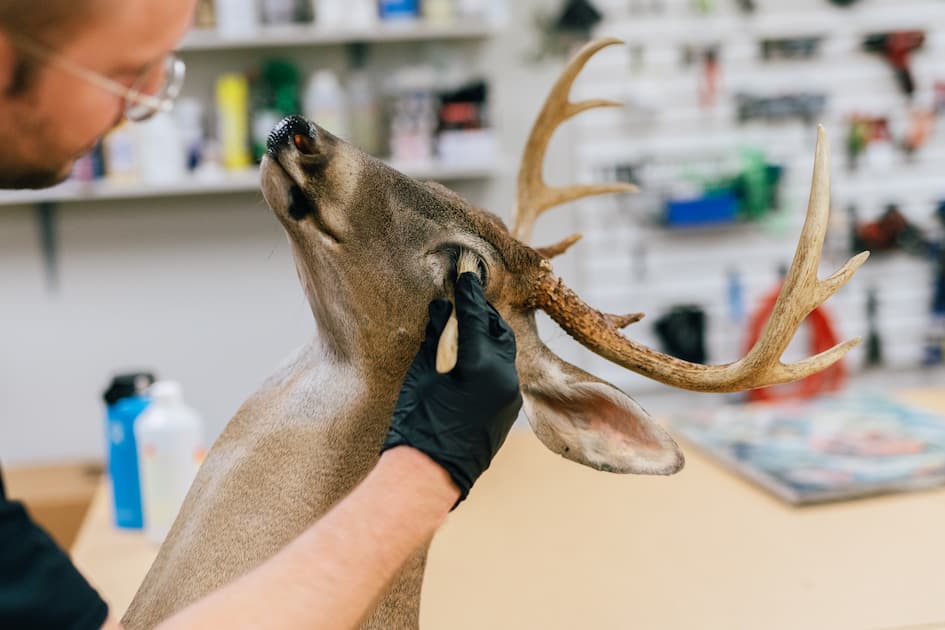
Prism Specialties restores taxidermy mounts damaged by fire, water, smoke, and mold across Columbus, Cincinnati, Dayton, Southern Ohio, Northern Kentucky, and West Virginia. Certified specialists coordinate directly with homeowners-insurance adjusters on Scheduled Personal Property and contents claims — from intake inspection through restoration return, with itemized conservator documentation logged at every step.
If the mount was in the room when the damage happened, taxidermy restoration starts with a documented inspection — not a replacement quote. That inspection is what the adjuster needs to release the claim.
Taxidermy sits inside Prism’s broader art restoration services across Columbus, Cincinnati, and Dayton.
Competition-graded trophies (P&Y, B&C, SCI-scored) and sentimental family mounts justify restoration cost in almost every claim we file. Victorian and pre-1950 specimens carry collector premiums that restoration preserves — re-mounting destroys it.
Photograph the mount from every angle before it moves. Capture species, damage event, room conditions, and any tag or appraisal paperwork. Your insurance adjuster needs a proof-of-loss record dated to the incident, not to the pickup.
Taxidermy is usually covered under contents, but high-value trophies often sit under Scheduled Personal Property. Confirm rider status before filing. Prism provides the itemized inventory the carrier needs either way.
Pipe bursts, basement floods, and sewage backups soak hide, fiberglass, and papier-mâché forms. Air-drying, rehydration, and form replacement recover mounts when treated within the 48 to 72-hour window.
House fires and kitchen fires push soot into hide pores and feather barbs. Dry-ice blasting and hide conditioning remove surface soot; deeper scorching requires partial disassembly and re-finishing.
Smoke penetrates deeper than it shows. Ozone treatment clears odor from enclosed structure; surface residue lifts with dry-ice and feather re-grooming. Fish mount paint touch-up follows a scale reseat.
Humid basements and long-term storage grow mold across hide and feather surfaces. Controlled-freeze fumigation kills active growth; hide treatment and pest eradication follow for pieces stored near infestations.
Victorian songbird domes, pre-1950 shoulder mounts, and early 20th-century fish mounts carry arsenical preservatives and fragile materials. Conservation-grade methods preserve patina rather than re-mount.
Broken antlers, cracked habitat bases, popped glass eyes, and collapsed forms from moves, storage, or transit. Shell replacement, scale reseating, and structural stabilization return mounts to display.
Claim-documented mounts restored in the Columbus workshop. Each slider shows the actual pre-loss condition documented for the adjuster and the restored piece returned to the homeowner.
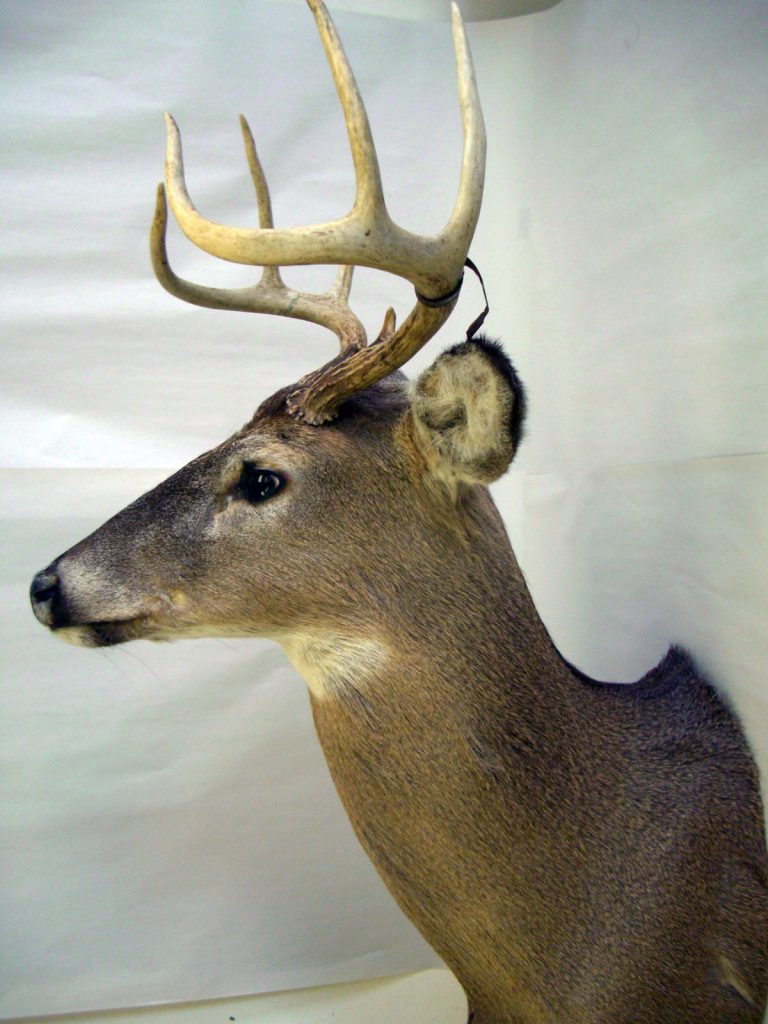
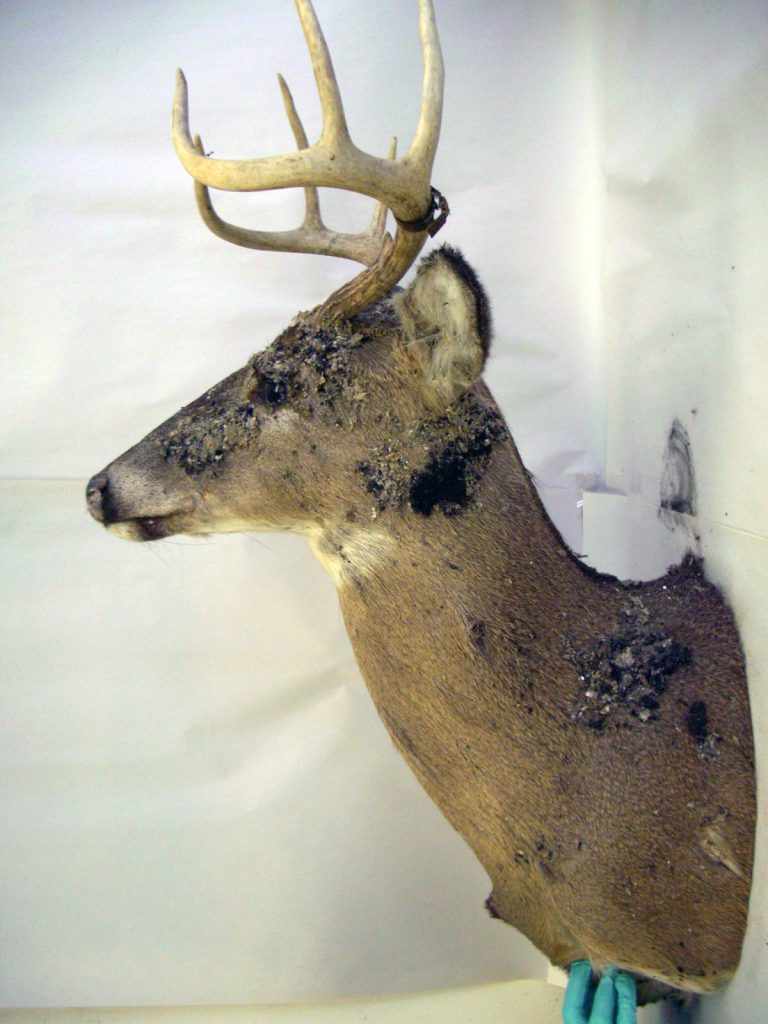
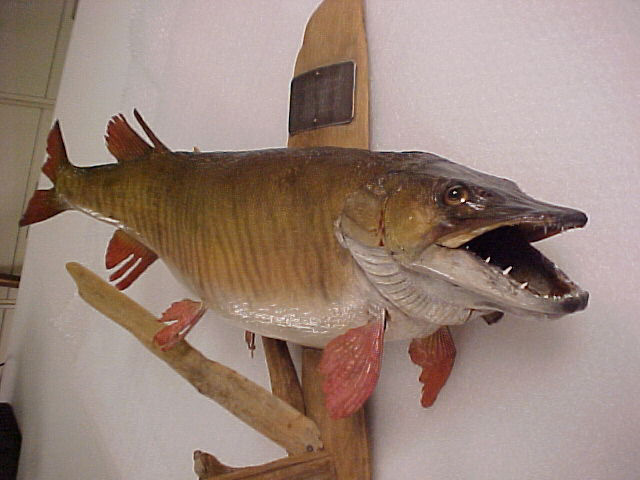
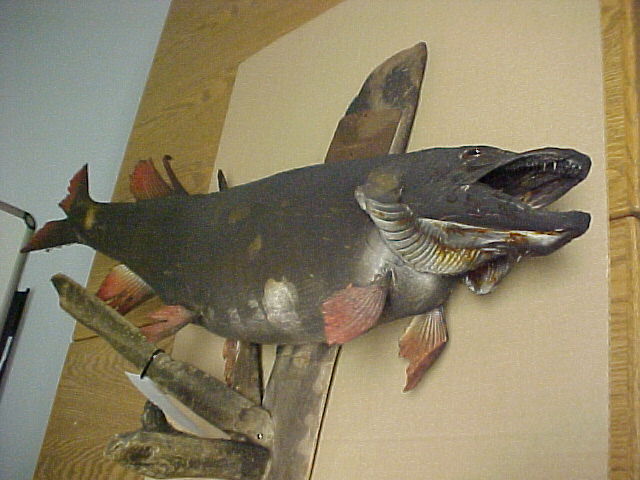
White-tail deer, black bear, elk, bobcat, pheasant, wild turkey, wood duck, largemouth bass, walleye, northern pike, and antique Victorian-era specimens all fall within Prism’s scope. Cleaning chemistry changes by species class; damage response changes by event type. Mammal hide mounts tolerate different solvents than feather displays. Fish skin and fiberglass mounts react differently to smoke penetration than keratin horn and antler. Antique specimens with arsenical preservation get reduced-intensity ozone and controlled-freeze fumigation — not the aggressive cleaning protocols modern mounts absorb. The matrix maps species class to the exact damage-event response used on insurance-claim restorations.
| Species class | Fire & Soot | Water & Flood | Smoke & Odor | Mold & Pest |
|---|---|---|---|---|
| Mammals (hide mounts) — deer, bear, elk, bobcat | Dry-ice blasting; hide conditioning | Air-dry + rehydration; polyurethane form replacement if collapsed | Ozone treatment + dry-ice; hide conditioning | Pest eradication + hide treatment |
| Birds (feather mounts) — pheasant, wild turkey, wood duck | Soot flush; feather re-grooming | Freeze-drying + feather re-set | Ozone treatment; quill stabilization | Fumigation; controlled freeze |
| Fish (skin & fiberglass) — bass, walleye, pike | Surface clean; paint touch-up | Gentle air-dry; scale reseating | Ozone + surface clean | Fungal treatment; paint repair |
| Antique & Victorian — songbird domes, pre-1950 mounts | Soft-brush soot lift; conservation-grade clean | Slow air-dry; papier-mâché form repair | Low-intensity ozone (arsenical-safe) | Controlled freeze; fumigation with PPE |
Real mounts restored in the Columbus workshop. Click any piece for project details.
The restoration workflow matches what insurance adjusters require for Scheduled Personal Property and contents claims — documented end-to-end, with timelines and conservator notes logged for the carrier.
Species identified, damage event logged, photographic inventory captured for the adjuster’s claim file.
Treatment plan and itemized conservator estimate delivered inside 48 hours. Scope of work shared with the carrier.
Dry-ice cleaning, ozone treatment, freeze-drying, hide conditioning — species-matched techniques, with progress updates.
Final photographs, conservator report, and climate-controlled return delivery — the claim file closes with before-and-after record.
Rick Walker, owner of Prism Specialties of Columbus, Cincinnati & Dayton, has spent thirty years on insurance-claim restoration and supervises every taxidermy intake personally — a different authority chain than a general contractor or a mount-studio taxidermist.
Scheduled Personal Property, contents claims, itemized conservator estimates, pre-loss condition documentation — the vocabulary is built into the workflow. Adjusters in Franklin, Hamilton, and Montgomery counties get a claim file formatted the way their carriers want to see it.
Shoulder-mount elk from Huntington WV, a full-body bear from Mason OH, a pedestal fish mount from Kettering — climate-controlled transport and chain-of-custody documentation cover the whole tri-state region.
Dry-ice blasting, ozone treatment, freeze-drying, controlled fumigation, and reversible hide conditioning — techniques matched to the species and the damage event, not a single-method shop.
Home workshop in Franklin County. Same-day taxidermy intake assessments and local pickup across the metro.
Hamilton County through Mason and across Northern Kentucky. Climate-controlled pack-out with 48-hour conservator assessment turnaround.
Montgomery County, Kettering, and the Southern Ohio corridor. Insured transport and chain-of-custody documentation on every mount.
Climate-controlled pack-out from Huntington and across West Virginia. Oversized mount transport handled as a line item on your claim file.
Most homeowners policies cover taxidermy as contents damage. Competition-scored and high-value trophy mounts frequently sit under a Scheduled Personal Property rider for full replacement coverage. Prism Specialties works the claim with your adjuster — species, damage event, pre-loss condition, and itemized restoration scope logged so the claim file reflects what the mount is actually worth.
A fire-scorched shoulder mount, a flood-soaked fish, a mold-spotted songbird dome — the piece isn’t gone. Conservator-grade restoration across Columbus, Cincinnati, Dayton, Southern Ohio, Northern Kentucky, and West Virginia, with insurance-claim documentation carried from first call through final delivery.