No Chemical Residue
Nothing left behind on food-contact surfaces. No rinse cycle. No wastewater to permit.
For plant managers, QA leads, and sanitation supervisors across Ohio, Northern Kentucky, and West Virginia. Production equipment, conveyors, walls, and ceilings cleaned in place — no water, no chemical residue, no wastewater. The method is a fit for USDA- and FDA-regulated environments, with scope planned alongside your QA team.
Nothing left behind on food-contact surfaces. No rinse cycle. No wastewater to permit.
A method fit for USDA- and FDA-regulated environments. Scope planned with your QA and EHS team.
Columbus office at 171 Schofield Drive. Crews across Cincinnati, Dayton, and Northern Kentucky.
Owner-operated by Rick Walker. Food plant work anchored in restoration discipline.
Single plants or multi-site groups. Same crews, same documentation, one number for every facility.
Running commercial kitchens rather than production lines? Hood and duct work lives under commercial kitchen hood cleaning. Production plants stay on this page — call (614) 866-4484 to scope yours.
Cleaning for food production sites across Ohio. Poultry, meat, dairy, bakery, beverage, and packaged-food plants. One contact for every plant you run. Ready to scope a plant? Request a site assessment or call the commercial line in Columbus: (614) 866-4484. Non-food plants fit under industrial equipment cleaning.
Fillers. Ovens. Slicers. Wrappers. Depositors. Cleaned where they sit. No tear-down. Equipment runs again on the next shift.
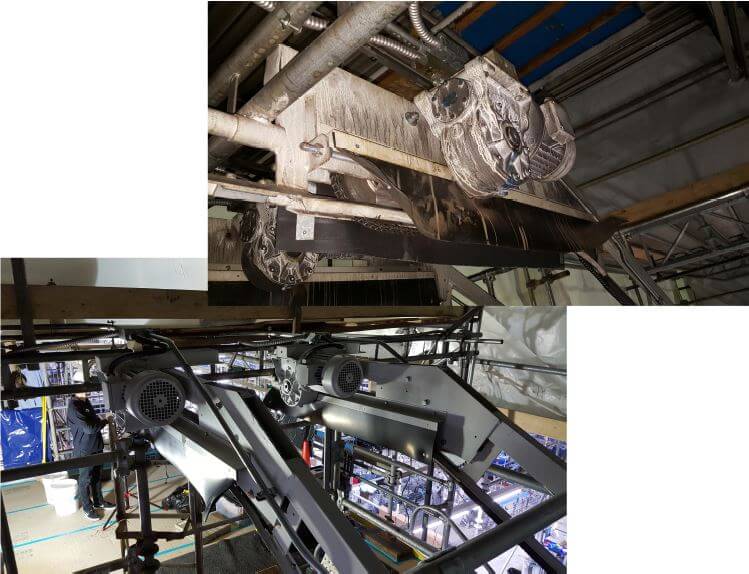
Belts. Rollers. Overhead conveyors. Drive systems. Cleaned in place without disassembly. Buildup lifts off belt surfaces and rollers dry. Conveyor lines restart without a rinse step.
Smoke film. Grease haze. Dust. Mold. High interior surfaces cleaned without chemical wash-down. The production envelope stays dry from deck to floor.
Vessel exteriors, frames, and jackets. Baked-on residue and grease lifted without solvents. Interior vessel cleaning stays with your sanitation program.
Fire residue. Smoke and soot. Mold. Time-sensitive cleanouts after an event at the plant. Restoration roots apply directly to food facility recovery.
Recurring deep cleans between audits. Planned around production windows. Documented for your QA file. The cycle supports productivity, safety, and appearance.
A recent Prism Specialties project inside a chicken processing facility. Walls and ceilings cleaned across the full production envelope. Photographed before and after.
Facing the same buildup over your lines? Request a site assessment or call (614) 866-4484.
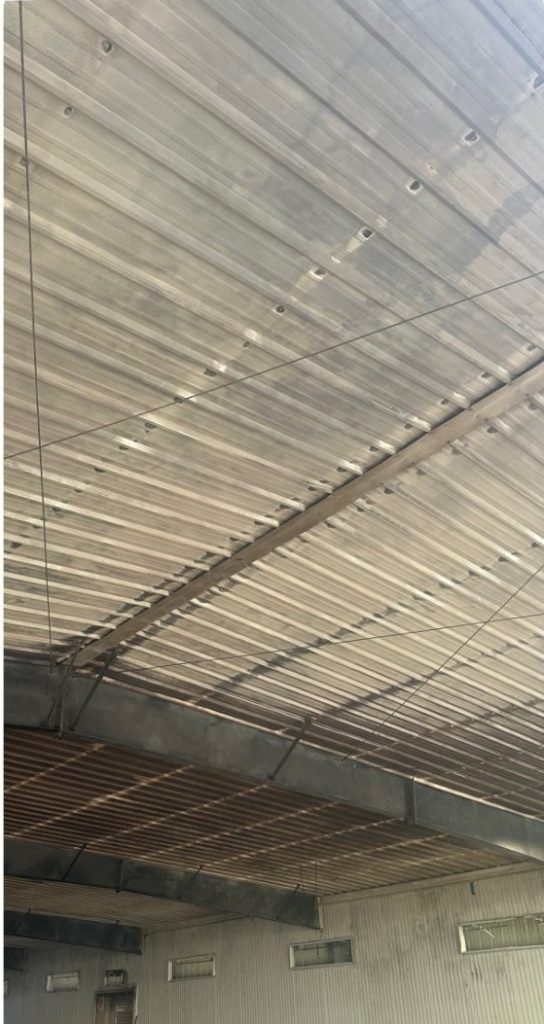
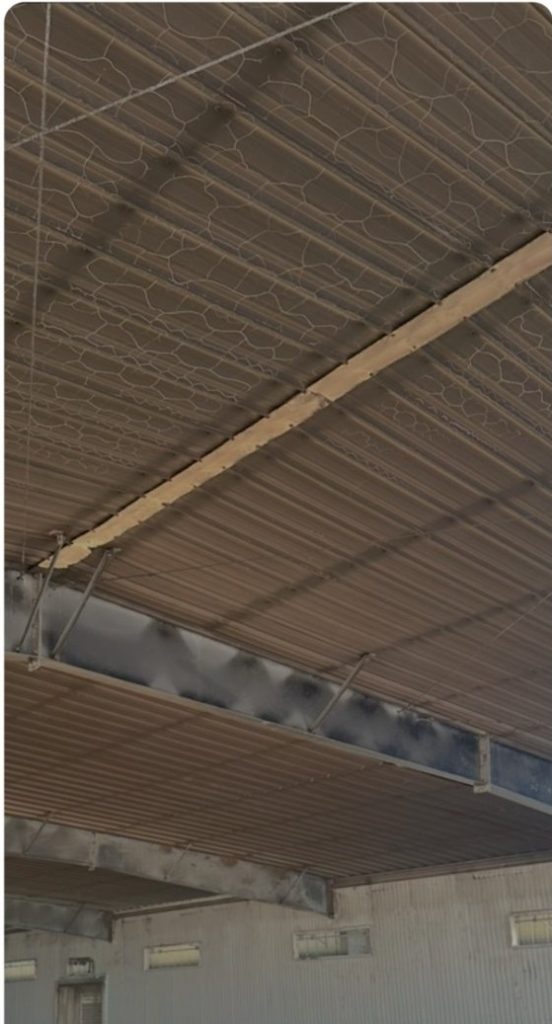
Years of process residue coated ceiling panels and upper walls. Buildup over production lines is an audit finding waiting to happen. Chemical fogging was off the table above food zones.
Dry ice blasting across walls and ceilings, staged in zones. No water introduced above equipment. No chemical residue left on the envelope.
Ceilings and walls returned to clean, inspectable condition. The plant kept its production schedule. Photo documentation went straight to the QA file.
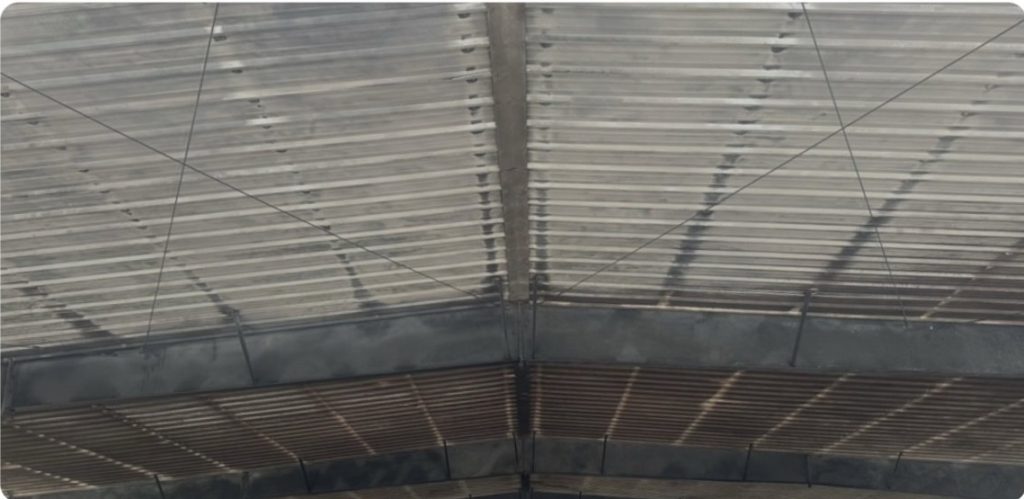
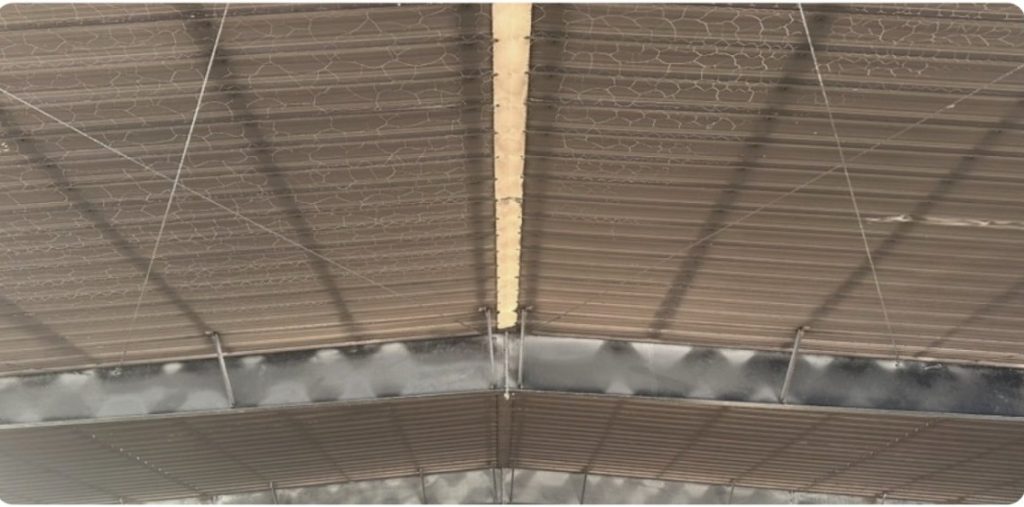
Same ceiling run at a poultry facility. Buildup on top, cleaned panels below. No chemical residue on the production envelope.
No tear-down. Conveyors, fillers, ovens, and wrappers cleaned where they sit. No reinstall labor. Lines run on the next shift.
Pellets become gas. No detergent runoff. No chemical sludge. Only the removed soil remains, collected dry and handled per your site rules.
Photos before and after. Scope in writing. Records formatted for audit review. Next service date on the calendar before the crew leaves.
Dry ice blasting leads on food-adjacent surfaces. Steam covers heavy grease. The crew picks the method by surface, contaminant, and production schedule. One crew. One method fit per surface. One quote. Read how dry ice blasting works before the walkthrough.
No water. No chemicals. No residue. Food-grade CO2 pellets turn to gas on contact and lift soil away. As a method, it fits USDA- and FDA-regulated environments.
Heat does the work on grease. Oils and fat buildup on equipment exteriors and floors. Minimal water. No harsh chemicals near production surfaces.
Exteriors and docks only. Heated power washing for loading docks, exterior walls, and fleet. Kept well away from production zones.
Yes — that is its strongest use case. Pellets are food-grade CO2 and turn to gas on contact. Nothing wet, chemical, or abrasive stays behind on surfaces. Scope is planned with your QA or EHS team before work starts.
Tell us the plant type, line count, and the window you can give the crew — weekend, shift gap, or planned shutdown. Assessments in Columbus, Cincinnati, or Dayton are scheduled within 48 hours. Fixed-scope quote follows. Call (614) 866-4484 for the commercial estimator.